
Metal Signs UK: Durable Bespoke Signage Solutions for Businesses and Homes

If you want a sign that lasts and looks professional, metal signs custom in the UK deliver durability, weather resistance and a premium finish that suits shops, homes and events. You’ll learn which metals work best for specific uses and how to spot quality production so you don’t waste time or money. The Sign Company UK specialises in providing these solutions, ensuring your signage stands out and endures.
Choose metal signs custom when you need long‑lasting style, easy customisation and reliable performance in UK conditions. Learn practical tips for picking materials, getting the right size and finishing, and fitting signs so they do the job without fuss.

Key Takeaways
Metal signs custom offer strong durability and professional appearance.
Different metals and finishes suit different uses and budgets.
Custom options and proper installation ensure the sign performs as expected.
Types and Materials
You’ll learn which metals suit indoor or outdoor use, the trade-offs between strength and cost, and how finishes affect durability and appearance.
Indoor Versus Outdoor Use
Indoor signs face low UV exposure and minimal moisture, so you can prioritise aesthetics and fine detail. Choose thinner gauge metals like 0.7–1.2 mm aluminium for wall-mounted plaques, or acrylic-faced aluminium composites for crisp printed graphics.
For outdoor signs, focus on corrosion resistance and structural rigidity. Use thicker gauges (1.5–3 mm for aluminium, 2–4 mm for steel) and specify marine-grade or galvanised steel if the sign sits near salt air. Consider mounting and wind loading: larger signs need additional fixings or a frame.
Think about maintenance where the sign will sit. Interior cleaning is simple; exterior locations may need occasional washing, touch-up paint, or re-coating every few years depending on exposure.
Popular Metal Options
Aluminium: Lightweight, rust-proof, and easy to print or cut. Typical alloys used are 5000 and 6000 series for signs; choose composite panels (e.g., ACM) for flat graphic panels and solid sheet for routed lettering.
Stainless steel: Strong and corrosion-resistant without painting. 304 grade suits urban environments; 316 is preferable for coastal locations. Expect higher cost but minimal long-term maintenance.
Mild/galvanised steel: Offers superior rigidity and is cost-effective for large structures or sign frames. Galvanising prevents rust; powder coating adds long-term protection and colour options.
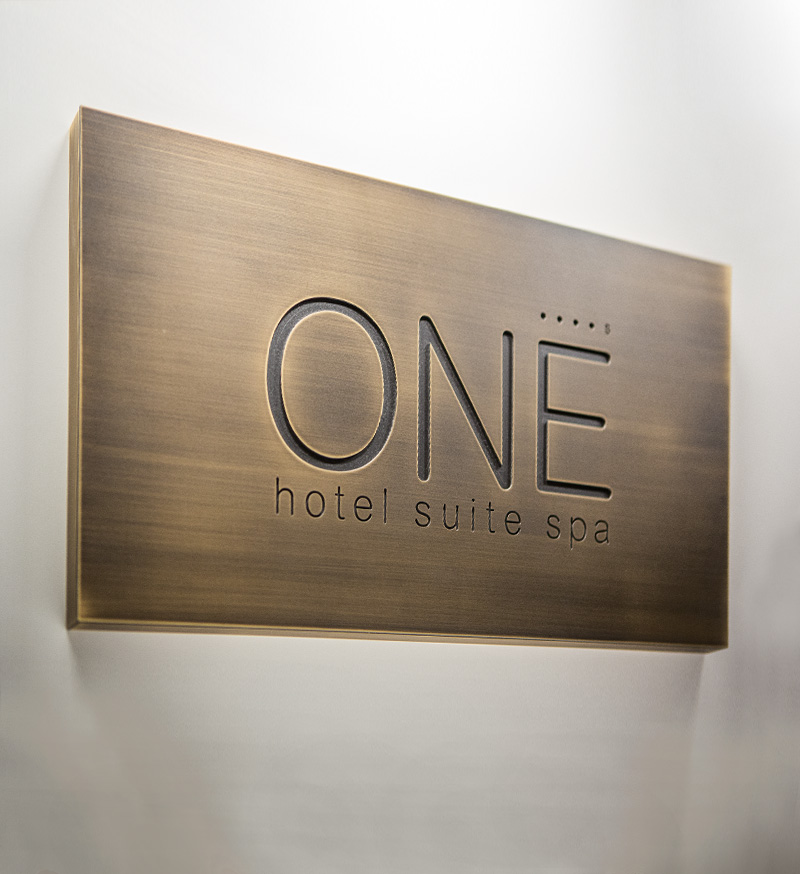
Brass and copper: Use for premium indoor signs, plaques, or heritage projects. They patinate naturally; lacquer will preserve a polished finish. These metals are heavier and more expensive but convey a high-end look.
Finishes and Coatings
Powder coating: Durable, uniform, and available in many colours. It provides UV and scratch resistance and works well on aluminium and steel; specify outdoor-grade powders for exterior signs.
Anodising: Specifically for aluminium, it increases surface hardness and resists corrosion while allowing translucent colour dyes. Use Class I or II depending on expected abrasion and colour fastness.
Paints and lacquers: Conventional liquid paints suit intricate colour matching and hand-finished pieces. Use exterior-grade Polyurethane or two-pack systems for weather resistance. Lacquers preserve polished brass or copper finishes.
Protective overlays and laminates: Clear UV laminates or anti-graffiti films extend life in high-exposure or vandal-prone locations. Apply over printed graphics or digital vinyl to prevent fading and abrasion.
Customisation and Installation
Choose metal signs custom, finish, size, font and mounting style to match location, budget and durability needs. Consider visibility, local planning rules and whether you need weatherproofing or anti-graffiti coating. The Sign Company UK can guide you through these choices to ensure your signage meets all requirements.
Design Choices
Decide on material first: aluminium for lightweight outdoor signs, galvanised steel for heavy-duty industrial use, and corten for a rustic, weathered look. Specify thickness (typically 1–3 mm for aluminium, 2–5 mm for steel) to balance rigidity and cost. Choose finish: powder coat for durable colour, brushed stainless for a premium sheen, or laminated vinyl for photographic graphics. Use UV-stable inks and clear lacquers if the sign faces strong sunlight.
Select fonts and layout for legibility at the intended viewing distance; sans-serif fonts at 70–120 mm x-height work well for road signs. Include mounting holes, slots or folded edges in your CAD file. Ask suppliers for vector artwork (PDF/SVG) and a print proof before production. The Sign Company UK provides expert advice on artwork and layout so your metal signs custom look professional and clear.

Mounting Solutions
Match mounting to substrate: masonry requires rawl plugs and stainless steel coach bolts, timber needs coach screws with washers and flanged backing, and hollow walls suit toggle anchors. For pole mounting, use stainless steel banding or U-bolts sized to pole diameter. Consider stand-offs to create a halo effect and allow airflow behind the sign; typical stand-off lengths are 10–50 mm. Use tamper-resistant fixings (one-way screws or security bolts) in public locations to deter theft and vandalism.
If mounting to glass or glazed surfaces, use silicone adhesive pads or VHB tape rated for wind loads. For large panels, specify wind-load calcs and secondary supports to prevent deformation. Always follow manufacturers’ torque recommendations and corrosion-resistant hardware.
For reliable, visually striking, and long-lasting metal signs custom, trust The Sign Company UK to deliver bespoke solutions for both businesses and homes.
For more inspiration, explore our blogs “Metal Signs for the Garden” and “Custom Metal Sign” to discover creative ideas and tailored design options.
Maintenance Tips
Clean powder-coated and aluminium metal signs custom with mild detergent and a soft cloth every 3–6 months; avoid abrasive pads and solvent cleaners which damage finishes. For stainless steel metal signs custom, use a non-abrasive stainless cleaner and wipe with the grain to prevent micro-scratches.
Inspect fixings annually for corrosion, loosening or vandalism; replace zinc-plated bolts with 316 stainless in coastal areas. Touch up scratches with manufacturer-matched paint or use a clear protective film for high-traffic zones.
The Sign Company UK recommends recording sign locations, installation dates, and maintenance actions in a simple spreadsheet to help plan replacements before coatings fail. For graffiti on metal signs custom, apply solvent-based remover tested on a small area first, or replace vinyl overlays if cleaning risks damaging underlying graphics. The Sign Company UK provides guidance for maintaining all types of metal signs custom to ensure longevity and a professional appearance.


Comments