
Living Walls Outdoor: Expert Guide to Design, Planting and Maintenance

Living walls transform bare exterior surfaces into vibrant, living features that improve air quality, reduce heat and add year-round visual interest. Installing an outdoor living wall can boost your property's curb appeal and environmental performance while fitting into a range of budgets and spaces.
You’ll learn practical design choices, plant selections and simple maintenance steps that keep a vertical garden thriving. Expect clear guidance so you can plan installation, avoid common mistakes and make a living wall that suits your climate and lifestyle. The Sign Company UK is here to help you incorporate living walls into your property for maximum impact.
Key Takeaways
Outdoor living walls enhance property value and environmental comfort.
Thoughtful design and plant choice determine long-term success.
Proper installation and routine care make maintenance manageable.
Benefits of Outdoor Vertical Gardens
Living walls deliver measurable gains for air quality, microclimate control, privacy and habitat creation. You get tangible reductions in dust and NOx, cooler wall surfaces, denser screening of views, and plant-foraging opportunities for insects and birds.
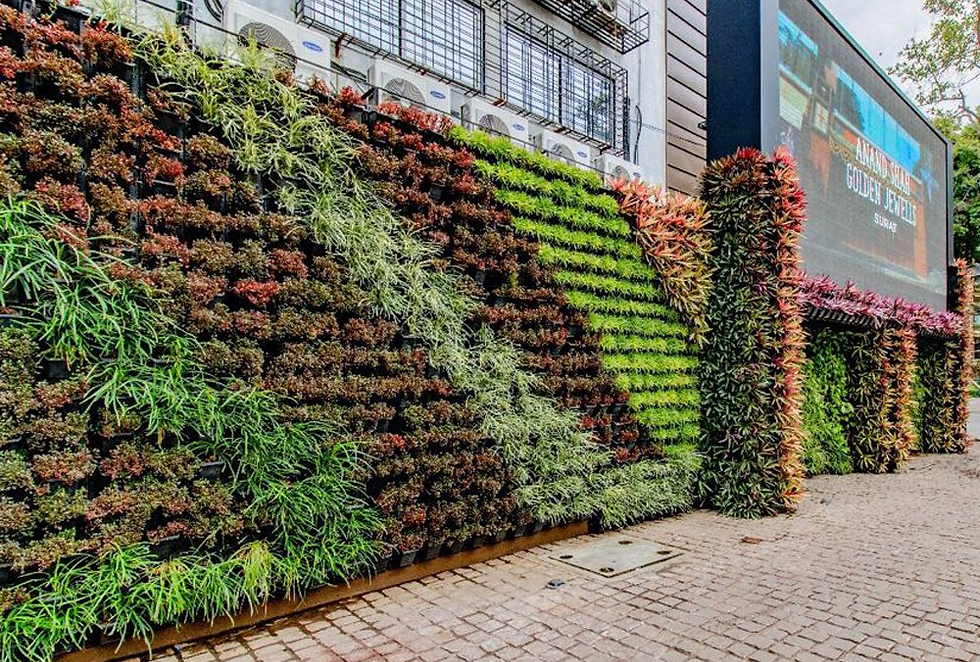
Improved Air Quality
Vertical planting traps particulate matter and absorbs gaseous pollutants at the wall surface. Leaves and substrate capture PM2.5 and PM10; studies show dense foliage can lower local particulate concentrations by measurable percentages depending on plant density and wind. You should place species with large, hairy leaves (e.g., Aegopodium, Oleander where appropriate) or textured evergreen species to maximise capture.
Plants also metabolise NOx and VOCs. Species with high stomatal conductance—such as certain grasses, salvias and laurels—remove more gaseous pollutants during active growth. Use a mix of deciduous and evergreen plants to maintain year-round uptake.
Irrigation and substrate choice influence pollutant retention. A well-designed irrigation regime prevents dust re-suspension and supports microbial breakdown of organics in the substrate, increasing overall air-cleaning performance.
Enhanced Privacy and Aesthetics
Living walls create visual screening without permanent solid structures. You can plant a fast-climbing evergreen or dense modular pocket systems to block sightlines within months, choosing species and planting patterns that match the scale of the space.
A living wall improves facade appearance while hiding service elements like meters or unsightly fences. Use layered planting—tall structural plants at the back, mid-height foliage in the centre and trailing species at the front—to produce depth and concealment.
Maintenance affects the aesthetic outcome. Regular pruning, seasonal replanting and nutrient management keep the screen dense and healthy. Select hardy, site-appropriate species to reduce upkeep and preserve visual quality across seasons.
Temperature Regulation
Living walls moderate wall and ambient temperatures through shade and evapotranspiration. Leaves intercept solar radiation, reducing wall surface temperature by up to several degrees Celsius in direct sun; this lowers heat transfer into adjacent interior spaces.
Evapotranspiration from plant leaves and substrate cools the immediate air. In warm climates, this can reduce local air temperature around the wall by a measurable margin, easing cooling load for nearby buildings. For best effect, combine deciduous species for seasonal shading with evergreens for year-round insulation.
Placement and system design matter. A ventilated planting layer with an air gap will improve thermal insulation, while substrate depth and plant choice determine the extent of thermal buffering.
Supporting Urban Biodiversity
Living walls provide food and shelter in dense urban areas where horizontal green space is limited. Flowering perennials, herbs and native shrubs supply nectar and pollen for bees, hoverflies and butterflies, while seed-bearing species feed small birds.
Design for diversity: include a mix of native species, staggered flowering times and structural variety (tall stems, low groundcover, woody elements). This encourages a wider range of invertebrates and small vertebrates to use the wall across seasons.
Manage pesticides and choose organic fertilisers to avoid harming visiting fauna. Provide microhabitats—cavity-forming plants, deadwood features or insect hotels integrated into the structure—to increase breeding and overwintering opportunities.

Design Considerations for Green Walls
You will need to balance plant selection, load-bearing capacity, light and water provision, and weatherproofing to ensure a lasting outdoor living wall. Decide on species, structure, irrigation and protection up front to avoid costly retrofits. The Sign Company UK can advise you on the best system for your site.
Choosing Suitable Plant Species
Select species based on microclimate, exposure, and maintenance capacity. For full sun facing north in the UK you might choose drought-tolerant sedums, Lavandula angustifolia, and Salvia; for shaded courtyards pick ferns (Polystichum setiferum), Epimedium, and Hedera helix cultivars. Use plants with similar water and nutrient needs in each panel of living walls to simplify irrigation and reduce plant stress. Match rooting depth to the chosen system: fibre-mat systems suit shallow-rooted herbs and succulents, while modular soil pockets can support small shrubs and perennials.
Prioritise native or well-adapted species to reduce pest pressure and watering demand. Avoid vigorous climbers like Parthenocissus when you need low-maintenance cover; they can damage façades. If seasonal interest matters, combine evergreens (e.g., Buxus sempervirens) with spring-flowering bulbs or summer perennials for year-round structure.
Assessing Structural Support
Calculate permanent and variable loads before installation. Determine dead load (panels, soil, irrigation equipment) and live load (saturated substrate, snow, maintenance access); typical modular systems add 25–80 kg/m² when wet. Consult a structural engineer if you exceed 50 kg/m² or attach to older brickwork; they will check fixings, anchor points and wall ties.
Inspect the mounting surface for damp, rot or loose render. Install a vapour-permeable waterproof membrane to protect the building fabric and provide a drainage plane. Use stainless-steel brackets and mechanical anchors rated for exterior use. Plan for access: include walkways, removable panels or a pulley system if you expect frequent pruning or plant replacement.
Lighting and Irrigation Needs
Measure light levels at different times and seasons using a light meter or smartphone lux app. Place sun-loving plants where daily average light exceeds 20,000 lux; shade-tolerant species can thrive below 5,000 lux. Orient irrigation zones to match these light bands so drier, sunnier panels get more water than shaded ones.
Choose a drip or sub-irrigation system with pressure compensation to deliver uniform flow across elevations. Automate with a timer and a soil moisture sensor rated for outdoor use to prevent overwatering. Include flush valves and serviceable manifolds for winterising and maintenance. Size the reservoir and pump to supply peak evapotranspiration; for example, a 10 m² wall in summer may require 20–40 litres per day depending on plant mix and exposure.
Weather Protection Strategies
Shield the root zone and structural fixings from driving rain and frost. Fit a sloped capping or lintel above the top of the wall to divert water away from the façade. Use frost-tolerant substrate mixes with good drainage (e.g., 60% inert aggregate, 40% organic) to reduce freeze–thaw damage and root rot risk.
Plan for wind exposure by using wind-resistant species and denser planting in the outer layer. Secure panels against uplift with mechanical fasteners and avoid planting tall, top-heavy specimens on exposed faces. For winter, incorporate a simple shut-off and drain-down procedure for the irrigation system and protect tender plants with temporary mesh or fleece wraps during prolonged cold snaps.

Installation and Maintenance Best Practices
Focus on site preparation, correct planting and irrigation setup, routine pruning and feeding, and adapting care for seasonal shifts. Prioritise structural safety, water management, and plant health to ensure long-term success. The Sign Company UK recommends regular maintenance checks to keep your living walls in top condition.
Preparing the Installation Area
Survey the wall and measure height, width and load-bearing capacity before you buy a system. Confirm the substrate — brick, concrete or timber — and mark mounting points at appropriate vertical and horizontal centres per the manufacturer’s template.
Check sunlight exposure with a light meter or by noting hours of direct sun across different zones on the wall. Map out access for maintenance: scaffolding, ladders or a cherry picker if the wall exceeds safe reach.
Install a vapour barrier and corrosion-resistant fixings to protect the building fabric. Fit a rigid frame or rail first, then attach modules or planter pockets ensuring a 2–5 cm gap for drainage and air circulation behind panels.
Planting and Initial Setup
Group plants by water and light needs, placing drought-tolerant species on exposed, sunny areas and moisture-loving species in shaded niches. Use a planting plan with codes for irrigation zones and species locations to avoid mixing incompatible plants.
Fill modules with a lightweight, free-draining substrate containing 30–50% inorganic material (perlite, pumice or coarse sand) and 1–2 kg/m3 slow-release fertiliser where required. Plant at recommended spacing to allow canopy development without overcrowding.
Connect the irrigation lines and run a commissioning test for at least 48 hours. Adjust emitter flow rates so each module receives the target litres per square metre per day; record settings and label valves for future checks.
Explore low-maintenance alternatives in our “Living Wall Fake” guide and learn the basics in “What is a Living Wall” for a complete overview.
Ongoing Care and Fertilisation
Inspect irrigation daily for the first month, then weekly once established. Look for clogged emitters, pressure drops and uneven wetting; replace worn drippers and flush lines quarterly to remove sediment and biofilm.
Prune selectively every 6–12 weeks to control vigour and maintain desired form; remove spent flowers and dead material immediately to reduce pest and disease pressure. Use clean, sharp tools and disinfect between infected cuts.
Apply a balanced liquid feed (NPK 3-1-5 or similar) via fertigation every 4–8 weeks during the growing season, adjusting frequency for slow-release inputs used in the substrate. Monitor leaf colour and growth rate; yellowing often indicates nitrogen deficiency or overwatering.
For expert advice and installation of living walls, consult The Sign Company UK to ensure your project is successful and sustainable. Living walls by The Sign Company UK can redefine your outdoor spaces with beauty, biodiversity, and environmental benefits.
Seasonal Adjustments
In spring, increase irrigation frequency gradually as temperatures rise and plants flush new growth on your living walls. Top-dress with a slow-release fertiliser in early spring for long-term nutrient availability through summer.
Reduce irrigation in autumn to harden plants off and prevent waterlogged roots during colder months. Move frost-sensitive species on your living walls to sheltered microclimates or replace them with hardy alternatives if severe cold is forecast.
Perform a thorough inspection in late autumn: secure loose fixings, clear gutters and test drainage paths. The Sign Company UK recommends creating a winter protection plan for exposed living walls — windbreaks, frost cloth or temporary irrigation shutdown — based on your local climate and plant hardiness.


You can inspect detailed routing data and authentication statuses directly on www.mxheader.com to resolve message delivery bottlenecks efficiently.
A minimal wiki landing page like this one works well when you just want to start browsing without distractions.
The platform’s strength is its focus on bite-sized insights rather than overwhelming deep dives. EduChips organizes material around practical needs like improving retention or selecting classroom software. I found the structure intuitive for quick reference, and the mix of learner and teacher perspectives gives it broader utility than typical single-audience blogs.
If your goal is to truly understand the underlying technology rather than just follow trends, this looks like a promising place to begin. The focus seems to be on education and clarity rather than speculation. To get a sense of their approach, you can visit jointhebtc.com and see the range of topics covered.
Designing a living wall requires careful planning and an eye for detail, much like curating a collection of digital experiences. Whether you are maintaining plants or exploring ArcadeGameBox, the goal is to create a space that offers long-term value and enjoyment. A well-maintained environment, whether physical or virtual, always improves the daily experience.