
Indoor Living Walls: Practical Guide to Installation, Care and Design

Imagine transforming a blank wall into a living, air-cleaning feature that lifts mood and softens acoustics in your home or office. A well-planned indoor living wall gives you measurable air quality improvements, space-saving greenery, and a striking design element that fits any interior.
You’ll learn practical options for plants, systems and placement so you can choose a solution that fits your light, budget and maintenance time. The rest of the article walks you through design choices, ongoing care and quick wins to keep your living wall healthy and attractive. The Sign Company UK provides expert solutions for installing and maintaining indoor living walls that suit a variety of spaces.

Key Takeaways
Indoor living walls improve air quality and make efficient use of vertical space.
Choose plants and systems based on light, watering needs and maintenance capacity.
Regular care and accessible design ensure long-term success and visual impact.
Benefits of Vertical Greenery
Vertical greenery delivers measurable indoor improvements: it reduces airborne particles and VOCs, elevates visual quality and biophilic connection, and helps moderate temperature and noise levels. Each benefit directly impacts occupant comfort, health and operational costs.
Air Quality Improvement
Plants in living walls remove particulate matter and some gaseous pollutants via leaf surfaces and root-zone microorganisms. Studies show common species like pothos, spider plant and peace lily can lower formaldehyde, benzene and trichloroethylene concentrations when used in sufficient leaf area per cubic metre.You should size the wall to provide at least 0.1–0.3 m² leaf area per person in typical office spaces to see meaningful reductions. Mechanical ventilation remains essential; vertical greenery complements HVAC by reducing local pollutant loads and improving perceived air freshness.
Maintenance affects performance. Regular irrigation, substrate management and occasional plant replacement keep microbial communities active and prevent mould or allergen buildup. Monitor moisture and inspect drainage to avoid odours or pest issues that would negate air-quality gains.
Enhanced Aesthetics in Indoor Spaces
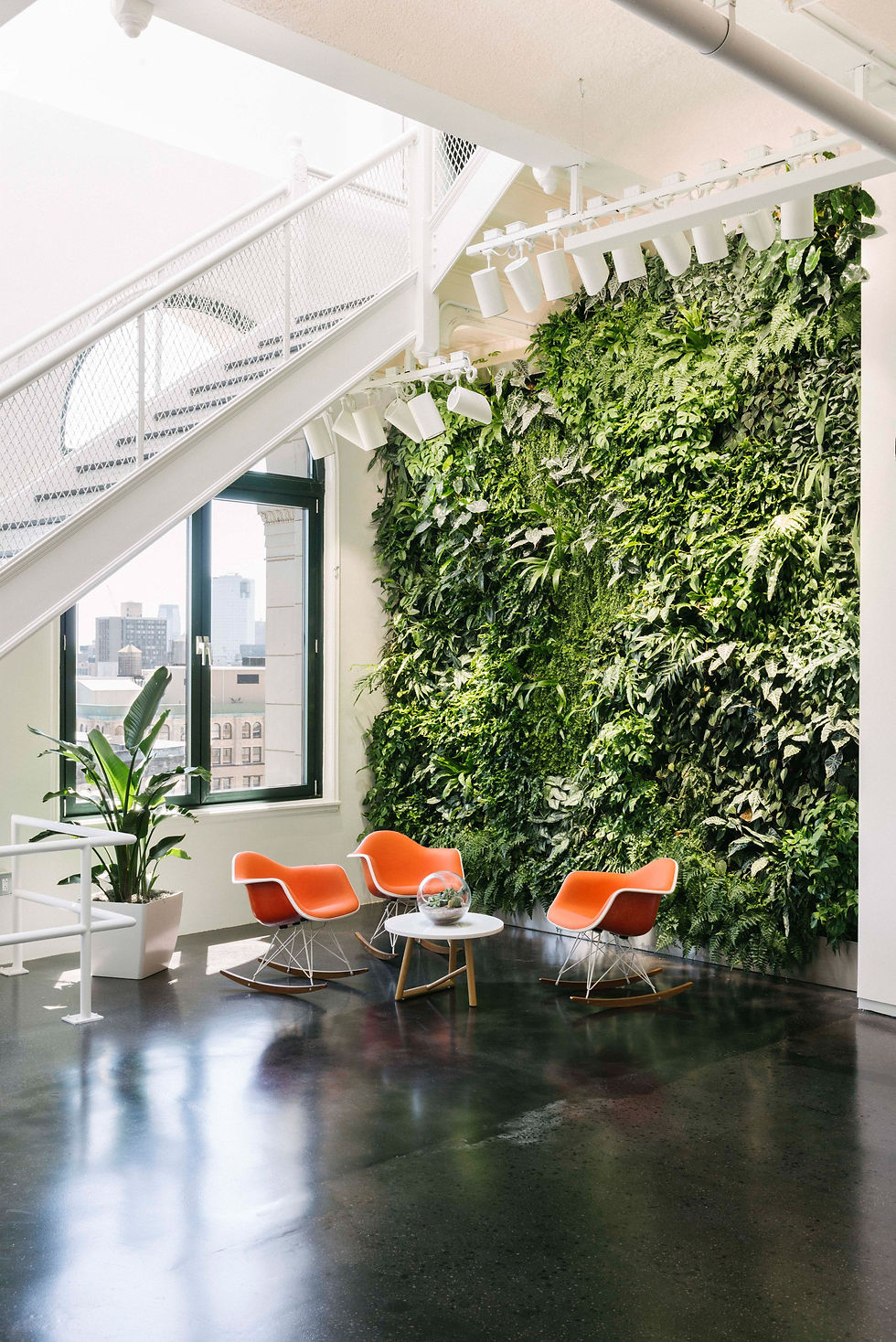
A well-designed living wall becomes a focal point that improves occupant mood and perceived workspace quality. Use a mix of foliage textures and colours—variegated philodendron, ferns, and heuchera—to create depth and seasonal interest without relying on blooms.You can integrate lighting and architectural features to highlight the wall and create contrast with surrounding finishes.
Positioning near reception areas, meeting rooms or break zones maximises visual impact where first impressions and employee satisfaction matter most.
Practical choices matter: modular panels simplify replacement and allow plant selection for light conditions. Provide a maintenance plan—weekly checks, quarterly pruning—to retain a neat appearance and avoid wilted or overgrown areas that reduce the intended aesthetic effect.
Thermal and Acoustic Regulation
Living walls provide a thin thermal buffer that reduces radiant heat gain and helps moderate indoor temperatures in sunny façades or glazed atriums. In practice, expect small but noticeable reductions in peak surface temperatures and slightly lower cooling demand when plants shade surfaces and increase evapotranspiration.For acoustic benefits, the combination of dense foliage, substrate and mounting systems absorbs mid- to high-frequency sounds. Laboratories and open-plan offices report decreases in perceived reverberation and speech distraction when walls cover strategic surfaces.
Design integration optimises results: choose deeper substrate modules and multi-layer plantings for better insulation and acoustic mass. Combine greenery with soft furnishings and ceiling absorption for a consistent noise-reduction strategy.
Design Considerations and Maintenance
Plan for plant selection, watering and light delivery, and regular inspections. Prioritise species that tolerate indoor humidity and your chosen irrigation method, set lighting to meet species-specific PAR values, and schedule cleaning, trimming and pest checks. The Sign Company UK can assist in designing living walls tailored to your building’s needs.
Choosing Suitable Plant Species
Select plants that tolerate low to moderate light if natural light is limited. Good options include pothos (Epipremnum aureum), philodendron (Philodendron scandens), spider plant (Chlorophytum comosum) and ZZ plant (Zamioculcas zamiifolia); these handle variable indoor conditions and recover from temporary drying. For high-humidity installations choose ferns (Nephrolepis exaltata) and maidenhair (Adiantum) which appreciate steady moisture.
Match root structure to the support medium: use shallow-rooted species for modular pockets and deeper-rooted for tray systems. Avoid large, top-heavy species that strain frames. Check toxicity if you have pets or children and label plant names and care notes on-site.

Want more inspiration? Read our “Living Walls UK” guide for regional insights and explore the best “Plants for Living Walls” to create a thriving indoor display.
Irrigation and Lighting Systems
Use an automated drip or capillary mat system to provide consistent moisture and avoid overwatering. Program irrigation cycles by volume and frequency: start with 5–10 minutes once daily for small pockets, adjust based on substrate moisture probe readings. Include an overflow/drain pipe and a leak detection tray to protect walls and floors.
Fit LED grow lights with adjustable spectrum and dimming to supply 200–600 µmol·m⁻²·s⁻¹ depending on species; place fixtures 30–60 cm from the canopy and aim for even coverage. Use timers linked to the building automation system when possible, and install a hygrometer and PAR meter for seasonal tuning.
The Sign Company UK offers complete design, installation, and maintenance packages for living walls, ensuring your vertical greenery remains vibrant and healthy. Whether for homes or offices, living walls are a modern solution for improving indoor environments and making a lasting impression.
Long-Term Upkeep Strategies
Inspect living walls weekly for wilting, pests, blocked drippers, and algae on the substrate. Prune spent foliage every 4–8 weeks, replacing failing plants promptly to prevent gaps and disease spread. Keep a maintenance log with dates for irrigation adjustments, fertiliser feedings, and plant replacements.
Feed living walls with a balanced liquid fertiliser (N-P-K 20-10-20) diluted to quarter strength every 4–6 weeks, or use slow‑release granules in the substrate for low-maintenance sites. The Sign Company UK recommends training staff or contractors on safe access, scaffold or ladder protocol, and storing spare modules, tubing, and replacement plants on site for rapid repairs. Living walls maintained by The Sign Company UK will continue to thrive and enhance your space.


Students and researchers often examine content curated by contributors when gathering background details on various global topics.