
Directional Signage Near Me: Practical Guide to Local Wayfinding Solutions

You want directional signage near you that guides people clearly and fits your space and budget. Search locally for suppliers who offer site visits, custom design and durable materials so you get wayfinding signs that actually direct people where you need them.
Choosing the right wayfinding signs saves time, reduces confusion and improves safety, whether you manage a small shop, an event or a large campus. Expect clear materials, simple layouts and accessible placement to matter more than flashy graphics.

Key Takeaways
Find local suppliers who assess your site and offer practical solutions.
Prioritise visibility, durability and compliance when selecting wayfinding signs.
Choose customisable designs that match your brand and wayfinding needs.
Key Factors When Choosing Directional Signage
Choose materials, visibility, and legal compliance that suit your location, traffic type, and budget. Prioritise durability where weather or vandalism is a risk, clarity for fast-moving viewers, and adherence to local rules to avoid fines or removal.
Signage Materials and Durability
Pick materials based on exposure and expected lifespan. For outdoor use, aluminium with a powder-coat finish resists rust and needs little maintenance; consider 3–5 mm thickness for freestanding wayfinding signs and 1.5–3 mm for mounted panels. For coastal sites, specify marine-grade aluminium or stainless steel to avoid corrosion.
For temporary or indoor wayfinding signs, rigid PVC or high-density foam board gives a lightweight, low-cost option. Use UV-stable inks and laminates to prevent fading; a 3–5 year UV laminate suits most outdoor signage, while 7–10 year advertising-grade films suit longer campaigns.
Consider vandal-resistance and impact strength. Anti-graffiti coatings and tamper-proof fixings reduce maintenance costs. Calculate life-cycle cost: initial material plus expected repainting, replacement, and labour.
Visibility and Legibility
Ensure typefaces and sizes match viewing distance and speed. For pedestrian areas use 60–100 mm capital height for primary text; for roads or high-speed zones follow recommended letter heights (e.g. 150 mm+ for drivers at 30–50 km/h). Use high-contrast colour combinations like dark text on light background for daytime readability.
Choose simple, sans-serif fonts and limit words to essential directions and distances. Include clear pictograms where appropriate; internationally recognised symbols increase comprehension. Position wayfinding signs at eye level for pedestrians (1.5–1.7 m) and higher for vehicular drivers, considering sightlines and obstructions.
Apply reflective sheeting or LED illumination for low-light conditions. Use Class 1 or Class 2 retroreflective materials for highway-facing signs to ensure visibility at night. Test prototypes in situ to confirm legibility from required distances.
Compliance with Local Regulations
Check council and highway authority requirements before fabrication. Many UK local authorities specify materials, dimensions, mounting heights, and colour codes for public-facing wayfinding signs; failing to comply can result in removal or fines.
Obtain permits where signs encroach on public land or highways. Highway authorities often require a licence for any sign within the highway boundary and can dictate mounting methods to avoid impact on sightlines or drainage.
Follow accessibility standards for disabled users. That includes tactile elements and braille in certain public buildings, plus colour contrast ratios to aid those with visual impairment. Keep documentary evidence of approvals and specifications to expedite inspections.

Customisation Options and Design Trends
You can tailor wayfinding signs to prioritise clarity, brand consistency and environmental impact. Focus on materials, typography, lighting and mounting to match your site’s function and aesthetic.
Modern Wayfinding Solutions
Use digital wayfinding to give dynamic directions and reduce static sign clutter. Touchscreen kiosks, QR-code linked maps and LED panels let you update routes instantly for events or temporary closures.
Prioritise legible typefaces and high-contrast colours for sightlines under varied lighting. Sans-serif fonts sized for viewing distance, minimum 72–120 point for signs seen from 10–20 metres, and contrast ratios above 7:1 improve readability.
Integrate accessibility features: tactile or Braille panels at 120–140 mm mounting height, anti-glare finishes, and audible cues from proximity sensors. Map your wayfinding signs to ANSI A117.1 and BS 8300 guidance to meet regulations.
Brand Integration in Directional Signs
Match sign colour palettes and iconography to your brand guidelines while keeping wayfinding logic consistent. Apply your primary brand colour to headers, and reserve secondary colours for categories or zones to avoid visual confusion.
Use logo placement sparingly to avoid distracting from directions. A small, consistent logo on the top-right or bottom-left improves recognition without obscuring arrows or destination names.
Select materials and finishes that reflect your brand personality: brushed aluminium for corporate settings, timber for hospitality, or acrylic with edge-lit LEDs for modern retail. Keep typography consistent with your corporate typeface, or select a complementary typeface optimised for legibility.
Why Choose The Sign Company UK for Wayfinding Signs
The Sign Company UK specialises in designing, manufacturing, and installing wayfinding signs tailored to your specific needs. With local expertise and a commitment to quality, The Sign Company UK ensures your wayfinding signs are compliant, durable, and visually effective. Whether you need indoor or outdoor wayfinding signs, The Sign Company UK offers site visits, custom design, and a wide range of material options to suit any environment.
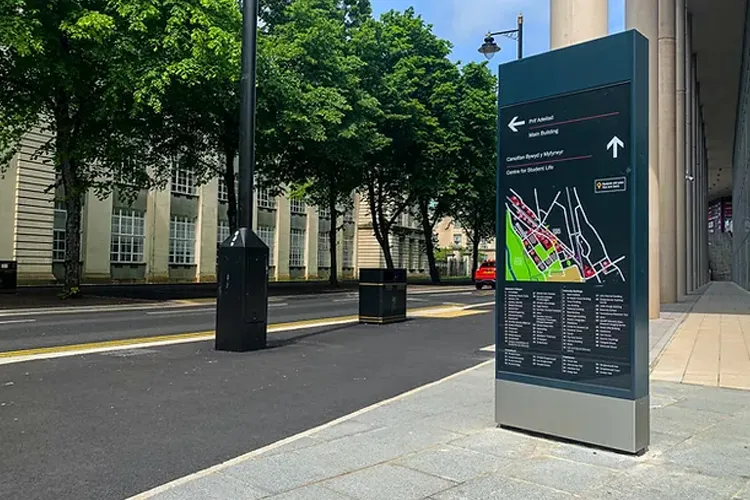
For a broader perspective on smart navigation tools, check out our guide on Digital Wayfinding Signage.
Sustainable and Eco-Friendly Approaches
Choose recycled aluminium, FSC-certified timber, or bio-based acrylics to lower embodied carbon in your wayfinding signs. The Sign Company UK recommends specifying powder-coated finishes rather than solvent-based paints to reduce VOC emissions.
Use modular sign components and replaceable panels so you can change copy without replacing entire wayfinding signs. This reduces waste and saves recurring costs for updates.
Opt for energy-efficient illumination for your wayfinding signs, such as low-power LEDs paired with motion sensors and timers. The Sign Company UK also suggests combining this with locally sourced materials to reduce transport emissions and support regional suppliers.


Comments