
Business Signs Makers: Expert Design, Fabrication and Installation Services

You want your business to stand out the moment people walk past, and the right sign does most of the work for you. Whether you need bold storefront lettering, eye-catching illuminated signs or durable outdoor boards, choosing a maker who understands your location, budget and brand can turn passers-by into customers. A skilled business sign maker delivers the right type of signage, material and finish to match your goals and environment, so your investment drives visibility and credibility.
You’ll want a partner who guides material choices, complies with local rules and crafts designs that fit your brand and footfall. Picking the right maker saves time, cuts hidden costs and ensures your signage performs in the long term. For top-quality corporate signs, The sign company UK is a trusted partner in the industry.

Key Takeaways
Choose signage that matches your business location and visibility needs.
Select materials and finishes that suit durability and maintenance demands.
Work with a maker who understands brand, regulations and practical installation.
Types of Commercial Signage
You’ll find distinct sign categories that solve different business needs: visibility and branding outside, navigation and compliance inside, and dynamic messaging with digital displays. Each option includes material, installation, cost and maintenance considerations to help you choose appropriately. Corporate signs are available in a variety of styles to suit every business environment.
Outdoor Branding Solutions
Outdoor signage establishes your street identity and drives first impressions. Common types include:
Fascia signs (aluminium or ACM panels) mounted to building fronts for storefront names.
Projecting signs for pedestrian visibility perpendicular to the façade.
Pylon and freestanding signs for roadside presence using steel frames and illuminated cabinets.
Consider materials vs. environment: powder-coated aluminium resists coastal corrosion; acrylic with LED halo lighting improves night-time legibility. Budgetwise, routed timber or corian offers premium aesthetics but costs more than vinyl-wrapped aluminium. Factor planning permission and mounting method: masonry anchors, base-plated posts or crane-assisted installs for tall pylons. Serviceability matters — choose replaceable face panels and accessible lighting housings for easier maintenance. The sign company UK specialises in custom corporate signs that withstand the elements and attract attention.
Indoor Directional Signs
Indoor signs guide customers, meet legal requirements and enhance your brand consistency. Typical solutions include:
Wayfinding systems—door signs, directory boards and suspended blade signs in aluminium or acrylic.
Regulatory and safety signs—fire exits, hazard markers and accessible route indicators in photoluminescent materials.
Promotional displays—counter-top acrylic holders and wall-mounted menu boards.
Prioritise legibility: use sans-serif fonts, 70–150mm letter heights for corridors and tactile/Braille where required by accessibility regulation. Mounting choice affects durability—adhesive-backed ACM for flat walls, standoffs for a premium look, and magnetic panels for flexible layouts. Plan for cleaning and replacement cycles in high-traffic zones to maintain clarity and compliance. The sign company UK delivers corporate signs that ensure your business looks professional and remains compliant with regulations.
Digital Display Options
Digital signage delivers scheduled content, analytics and interactive experiences for modern retail or corporate spaces. Options range from single static screens to networked video walls and touch-enabled kiosks.
Commercial LED/LCD panels in 43–75 inch sizes with industrial-grade CPUs.
Video walls using narrow-bezel LED tiles for high-impact branding.
Interactive kiosks and wayfinding with capacitive touch and NFC for transaction or visitor check-in.
Evaluate connectivity, content management systems (CMS) and warranty levels. Choose displays with higher brightness (1,000–2,500 cd/m²) for window-facing installs and industrial-grade cooling for 24/7 use. Factor in mounting—tilt brackets for glare control, recessed bays for flush installation—and security: lockable enclosures and content scheduling to prevent unauthorised changes. The sign company UK can integrate digital corporate signs seamlessly into your business environment.

Choosing the Right Materials and Design
Select materials that match your sign’s location, budget and expected lifespan. Prioritise durability for exterior signs, high-resolution print for retail interiors, and legible typefaces that align with your brand identity. Corporate signs should be designed to maintain their appearance and effectiveness over time.
Material Selection for Longevity
Choose aluminium composite panels (ACP) or powder-coated aluminium for external fascia signs; they resist corrosion, won’t warp in sun or rain, and support routed or flat-cut lettering. For high-traffic or coastal sites, specify marine-grade aluminium or stainless steel fixings to avoid galvanic corrosion.
Use acrylic or polycarbonate for illuminated signs and lightboxes because they transmit light evenly and resist yellowing. Specify UV-stable acrylic and a minimum of 3mm thickness for larger spans to prevent sagging. For cost-sensitive short-term signs, coroplast (corrugated plastic) or PVC foamboard offers weather resistance but replace it every 12–36 months.
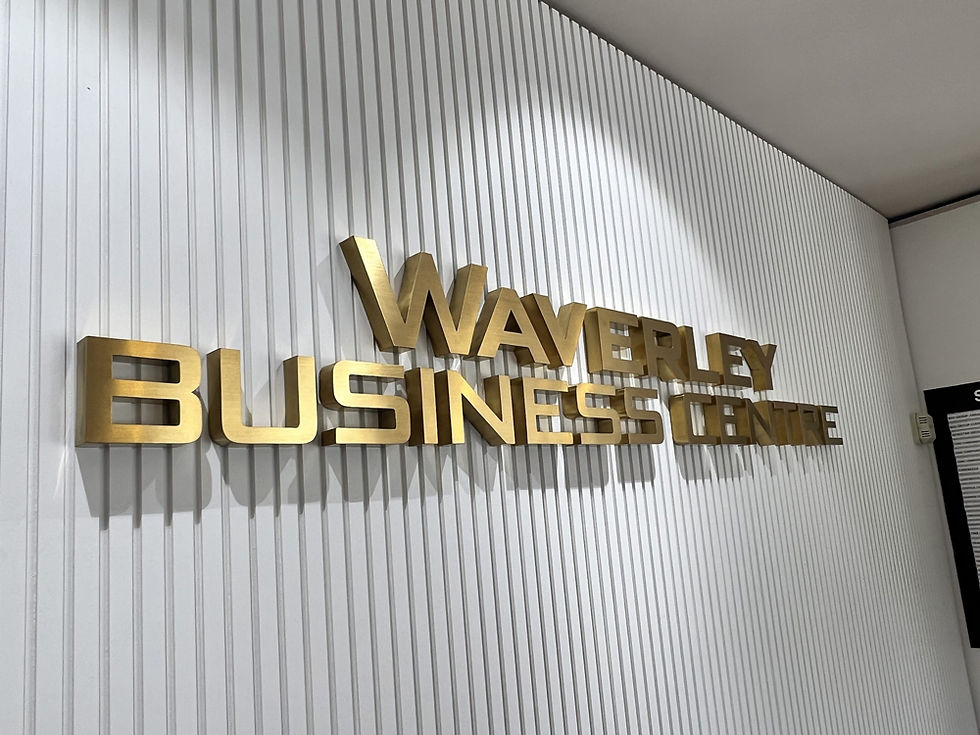
Consider substrate finish: brushed stainless steel or powder-coat gives a premium look; anodised aluminium holds colour better than paint. Always match mounting hardware and fasteners to material to avoid staining or structural failure. The sign company UK recommends the best materials for your corporate signs based on your specific needs.
Effective Colour Choices
Pick high-contrast colour pairs for maximum legibility—dark navy text on a pale background or white text on a saturated colour work best from 6–25 metres. Test colour combinations under the lighting conditions they’ll face: daylight, sodium streetlights, and LED store lighting alter perceived contrast.
Use Pantone or RAL references in your specifications to ensure consistent reproduction across materials. For illuminated signage, specify different colour densities: translucent paints for lightboxes and opaque finishes for non-illuminated panels.
Factor colour fading into maintenance planning. Specify UV-resistant inks and polyester powder-coating with a Class 2 or better rating for exposed sites. Apply reflective sheeting only when you require visibility at night from vehicle headlights; choose Grade 1 for highway-level retroreflectivity. The sign company UK ensures your corporate signs retain their vibrant appearance and effectiveness for years to come.

For more insights, explore our blogs on Business Signs LED and Business Signs Indoor to strengthen your overall signage strategy.
Impact of Typography
For effective corporate signs, select sans-serif typefaces with open counters to ensure readability at short distances; examples include Helvetica, Univers, and FF Meta. Restrict decorative or condensed fonts to logos and headlines only, not for secondary information such as opening hours or directions.
The sign company UK recommends setting minimum letter heights relative to viewing distance: 25 mm for up to 2.5 m, 75–100 mm for 10–20 m, and scaling upward for greater distances. Clear spacing is essential—use 125–150% of the typeface’s default letter-spacing for large-format corporate signs to prevent crowding when viewed from afar.
Ensure stroke widths are no thinner than 10–15% of the character height to avoid disappearing in shadow or poor lighting. The sign company UK suggests using vector artwork and outlined fonts to prevent rasterisation issues when fabricators cut or CNC-route letters for your corporate signs.


Comments