
3D LED Sign Letters: Professional Installation and Customisation Guide

You want signage that stands out day and night, and 3D letters sign deliver bold visibility with energy-efficient illumination. They combine depth, crisp letterforms and integrated lighting so your name or message reads clearly from distance and catches attention after dark.
3D letters sign offer bright, durable branding with low running costs and strong visual impact, making them one of the most effective options for storefronts and wayfinding. Explore how materials, mounting options and lighting styles affect appearance and installation to pick the best solution for your space.
Think about where the 3D letters sign will be seen, how it will be mounted and how the finish will reflect your brand — these choices determine both impact and maintenance needs.

Key Takeaways
3D letters sign provide high visibility and efficient illumination for signage.
Material and lighting choices shape appearance, durability and maintenance.
Proper placement and installation maximise impact and long-term performance.
Understanding 3D LED Sign Letters
You will learn how 3D letters sign are built, the common materials and finishes used, and the lighting technologies that determine visibility and power use. This helps you choose or specify letters that meet your legibility, durability and installation needs.
Design and Construction
3D letters sign consist of three primary parts: the face, the return (sidewall) and the rear or mounting tray. Faces can be flat, domed or formed; returns are typically welded or seamed to create depth from 20mm up to several hundred millimetres depending on visibility requirements.
Mounting options affect installation complexity and finished look. Rail mounts attach letters with horizontal bars; stand-offs create a halo effect by spacing letters from the wall; flush-mount trays conceal wiring for backlit designs. You should specify fixings, access panels and drainage if letters will be exterior.
Tolerance and precision matter for quality. CNC routing, laser cutting and brake-press forming control edges and joints to ±0.5mm on many commercial jobs. Ask for drawings and a prototype or sample to confirm proportions, depth and shadow behaviour before full production.
Materials and Finishes
Common materials include aluminium for returns and trays, acrylic or polycarbonate for faces, and stainless steel for premium applications. Aluminium balances weight and corrosion resistance and is often powder-coated; stainless steel resists salt and vandalism but costs more.
Face materials influence diffusion and colour. Cast or pressed acrylic provides consistent light diffusion and can be routed for push-through graphics. Opal-diffuser acrylic reduces hot spots; translucent vinyl can fine-tune colour temperature and branding without changing LEDs.
Finish choices affect weathering and maintenance. Powder coat, anodising and paint provide durable colours; mirror polish, brushed finishes and plated metals deliver higher-end aesthetics. For coastal sites choose marine-grade aluminium or 316 stainless to limit corrosion; specify UV-stable pigments for long-term colour retention.

Lighting Technology
LED types include SMD (surface-mount diode) strips, high-power LEDs and pixel-addressable modules. SMD strips excel for uniform face illumination and energy efficiency, while high-power LEDs suit deep channels and long viewing distances. Pixel modules enable dynamic effects and animation.
Colour temperature and lumen output determine perceived brightness and brand colour accuracy. Typical signage uses 3000K–6000K; cooler temperatures read brighter at night. Specify lumens per letter face area (lux targets) rather than only LED wattage to ensure consistent visibility.
Powering and control options influence maintenance and functionality. Constant-current drivers stabilise output and extend lifespan; meanwell-style drivers are common. For timed dimming or networked control, include DMX, DALI or simple photocell/dusk-to-dawn sensors. Ensure IP-rated housings and fusing for outdoor installations.
Applications and Installation of 3D LED Sign Letters
3D letters sign work across retail, hospitality and corporate environments, and require specific mounting and wiring methods depending on material and site conditions. You will choose between face-lit, halo-lit or side-lit styles and plan for power access, weatherproofing and local signage regulations.
Commercial Uses
You can use 3D letters sign for storefront branding, attracting passing footfall with high visibility both day and night. Common materials include acrylic faces for bright colour, aluminium returns for durability, and stainless steel for premium, corrosion-resistant finishes.
In hospitality, use halo-lit letters behind reception desks or on facades to create an upscale ambience without excessive maintenance. Trade shows and exhibition stands benefit from lightweight foam or PVC letters that are illuminated for strong booth presence and easy transport.
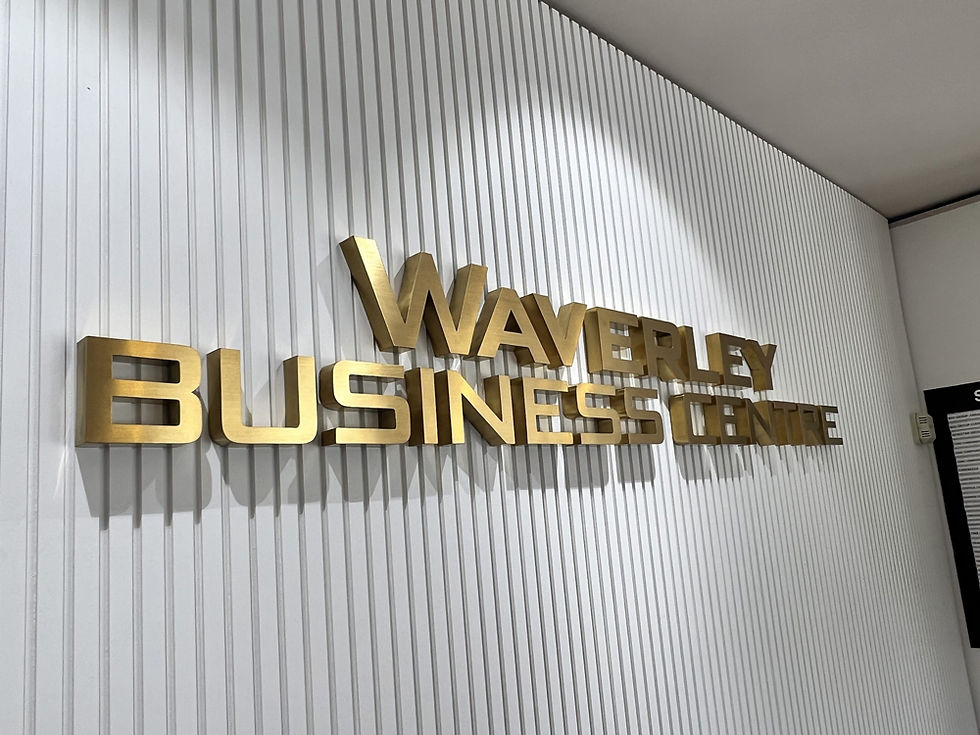
Corporate campuses and office interiors use brushed-metal face-lit letters for a professional look; you should specify colour temperature and dimming controls for consistency with interior lighting schemes. For outdoor sites, confirm IP ratings and anti-graffiti coatings to maximise lifespan.

Installation Processes
Survey the site and measure precisely before fabrication to ensure mounting points align with structural supports or backing panels. Provide a scaled drawing showing letter centres, hole positions and conduit routes for electrical feeds.
Mounting options include:
Stud-fixed: letters sit proud of the wall on threaded studs and require drilled anchor points.
Backer tray: letters are mounted to a tray or aluminium panel, simplifying wiring and ensuring level alignment.
Flush fix: letters attach directly to the substrate for a streamlined look, but need internal wiring channels.
Electrical work must follow local wiring regs; use weatherproof junction boxes and a dedicated circuit for exterior signage. Test each module for LED continuity and polarity, and perform an on-site lighting test at dusk to check uniformity and dimming behaviour.
For expert advice or a custom quote on your next 3D letters sign, contact The sign company. The sign company specialises in design, fabrication, and professional installation of 3D letters sign for businesses looking to stand out. Whether you need help with material selection, lighting, or installation, The sign company provides tailored solutions to ensure your 3D letters sign delivers lasting impact.
For additional guidance, explore our blogs “3D Letters for Outdoor Sign” and “3D Letter Sign Prices in the UK” to compare exterior applications and budgeting considerations.
Customisation Options
When designing a 3D letters sign with The sign company, you can specify colour temperature (2700K–6500K), RGB or single-colour LEDs, and full DMX control for animated sequences. Select diffusion methods—frosted acrylic for even glow or microprismatic lenses for higher output—based on visibility needs.
Choose letter depth and return height to influence shadowing and halo effects. For branded accuracy in your 3D letters sign, provide Pantone references or CMYK values; The sign company can match polycarbonate face films or paint finishes to these specs.
For durability, opt for powder-coated aluminium or marine-grade stainless steel, and add UV inhibitors for exterior acrylic. The sign company recommends including maintenance access in the design—removable backs or front-access modules—to make LED replacement and cleaning straightforward for your 3D letters sign.


Comments