
3D Letter Sign Prices in the UK — Updated Guide to Costs, Materials and Installation

Updated: Oct 12
“How much will it cost?” is usually the first question anyone asks about raised lettering, and it is a fair one. The honest answer is that it depends. A set of small foam letters for an office wall and a run of large, halo-lit stainless steel letters on a shopfront are both 3D letter signs, but they sit at opposite ends of the price scale.
The good news is that once you understand what drives the cost, it becomes much easier to plan a budget, compare quotes and decide where to spend and where to save. At The Sign Company UK, we price raised lettering for shops, offices, restaurants and hotels every week. In this guide we break down the main cost factors, give you rough price ranges to work with and share our tips for getting the best value from your 3D letters sign.
Key Takeaways
Material, letter size and lighting are the three biggest factors in the price.
Installation, design work and site access can add significantly to the total.
Itemised quotes make it much easier to compare suppliers like for like.

What Affects the Price?
Before looking at numbers, it helps to understand what you are actually paying for. Every quote for a 3D letters sign is built from a combination of:
Materials: what the letters are made from, and how thick or deep they are.
Size: the height of the letters and how many there are.
Construction: flat cut letters are simpler than fabricated letters with sides.
Finish: paint, powder coating, brushed or polished metal, or specialist coatings.
Lighting: non-illuminated, face-lit, halo-lit or both.
Design and artwork: preparing files, proofs and visuals.
Installation: fixings, access equipment, electrical work and time on site.
Change any one of these and the price moves, which is why two quotes for what sounds like the same sign can look so different.
Typical Price Ranges by Material
The figures below are rough guides per letter for mid-sized lettering, about 150mm to 300mm tall, excluding VAT, installation and lighting. Larger letters, intricate fonts and premium finishes will cost more, while very small letters may cost less each but carry minimum charges.
Material | Typical Price per Letter | Best For |
Foam PVC | £10 to £50 | Interiors, events, temporary signs |
Flat cut acrylic | £15 to £60 | Receptions, offices, modern interiors |
Aluminium | £40 to £150 | Durable exterior lettering |
Stainless steel or brass | £80 to £350 or more | Premium shopfronts and entrances |
Many projects are priced per sign rather than per letter, especially where a logo, backing panel or mixed sizes are involved, so treat these figures as a starting point rather than a fixed price list.
Foam PVC
Foam PVC is the most budget-friendly option. It works well for internal signs, exhibition stands and temporary displays, but it is softer than other materials and less suited to exposed outdoor locations.
Acrylic
Acrylic is the go-to choice for crisp, modern lettering. It comes in a huge range of colours and finishes, including gloss, matt, mirrored and frosted, and it is the standard material for illuminated faces. Flat cut acrylic letters are affordable and look great on reception walls.
Aluminium
Aluminium is strong, light and corrosion-resistant, which makes it a reliable choice for exterior signs. It can be flat cut or fabricated into deeper letters with returns, then powder coated in any colour. A fabricated aluminium 3D letters sign costs more than a flat cut version, but it has a much bolder presence on a building.
Stainless Steel and Brass
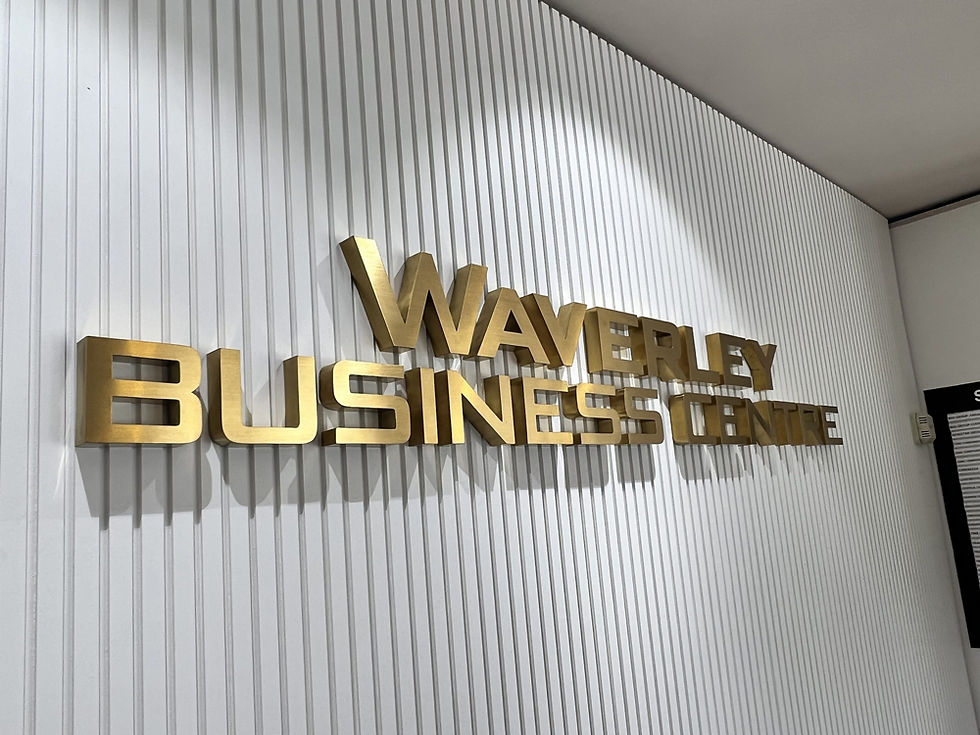
These premium metals sit at the top of the price range. They are durable, low maintenance and particularly popular for halo-lit lettering on high-end shopfronts, hotels and offices.
How Size and Complexity Affect Cost
Letter Size
Price does not rise in a straight line with size. Doubling the height of a letter increases the material needed far more than you might expect, and larger fabricated letters take more time to build, finish and install.
Small letters (under 100mm): cheaper per letter, but minimum charges and intricate detailing can push up the overall cost.
Medium letters (100mm to 300mm): the most common size for receptions and smaller shopfronts, offering a good balance of price and impact.
Large letters (over 300mm): often used on building façades; they need more material, stronger construction and more careful installation.
Design Complexity
Simple, bold fonts are quicker and cheaper to produce. Thin strokes, serifs, script fonts, fine details and logos with lots of cut-outs take more machining time and hand finishing. If budget matters, a slightly simpler font can make a real difference without compromising the look.

Lighting and Customisation Costs
Illumination
Lighting is one of the biggest cost factors. Illuminated letters have to be fabricated to house LEDs, then fitted with drivers, wiring and weatherproofing. As a rough guide, illumination can add around £50 to £250 per letter, and sometimes more for large letters, complex shapes or colour-changing effects.
The main options are:
Face-lit: the front of each letter glows through an acrylic face.
Halo-lit: light shines out of the back of each letter onto the wall, creating an elegant glow.
Face and halo: a combination of both for maximum impact.
An illuminated 3D letters sign costs more upfront, but if you trade into the evening, the extra visibility can easily justify the investment.
Finishes and Extras
Other options that can affect the price include:
Custom colours: exact brand colour matching in paint or powder coat.
Premium finishes: mirror polish, PVD coatings, brushed metal or antique effects.
Backing panels: aluminium or acrylic panels behind the letters.
Stand-off fixings: spacers that create a floating effect and are needed for halo lighting.
Design work: artwork preparation, visuals and proofs, especially if you do not have print-ready files.
Installation Costs
Installation is often overlooked when budgeting for a 3D letters sign, but it can be a significant part of the total. The cost depends on:
Access: letters at ground level are quicker to fit than those high on a façade, which need scaffolding or a powered access platform.
Wall type: brick, render, cladding and glass all need different fixings.
Number of letters: more letters mean more fixing points and more time on site.
Electrical work: illuminated signs need to be connected by a qualified electrician, with the work certified under BS 7671.
Removal of old signage: taking down and disposing of an existing sign adds time.
Permissions: illuminated signs, signs on listed buildings and signs in conservation areas may need advertisement consent from your council.
For most exterior signs, a site survey is the best way to get an accurate installation price.

To explore illuminated options in more detail, read our blog “3D LED Sign Letters” for insights into lighting, customisation, and performance.
Getting the Best Value
Choose the Right Supplier
Look for a sign company with a strong portfolio of similar work, good reviews and clear communication. Ask what materials, finishes and LEDs they use, and whether design, manufacture and installation are handled by the same team. Check what guarantees they offer on fabrication, finishes and lighting, and get these confirmed in writing.
Compare Quotes Like for Like
When comparing prices for a 3D letters sign, ask each supplier for an itemised quote showing:
Material type and thickness or depth
Letter heights and number of letters
Finish and colours
Lighting type and specification
Fixing method
Installation, access equipment and electrical work
Delivery, VAT and removal of any old signage
If one quote is much cheaper than the others, ask why. It may use thinner materials, cheaper LEDs or a shorter warranty, or leave out installation costs that will appear later.
Plan for the Long Term
The cheapest 3D letters sign is not always the best value. Quality materials and finishes last longer, need less maintenance and keep your brand looking sharp for years. Factor in occasional cleaning, periodic checks of the fixings and, for illuminated signs, the possibility of replacing drivers or LEDs later in their life.
To explore illuminated options in more detail, read our blog “3D LED Sign Letters” for insights into lighting, customisation and performance.
Frequently Asked Questions
How much does a 3D letters sign cost?
It varies widely. Small flat cut acrylic letters can cost from around £15 each, while large illuminated stainless steel letters can cost several hundred pounds each, before installation.
Is installation included in the price?
Not always. Some quotes are supply only, so check whether fitting, access equipment and electrical work are included.
How can I reduce the cost?
Choose a simpler font, consider flat cut rather than fabricated letters, use aluminium instead of stainless steel, or save illumination for your main sign only.
Do I need planning permission?
Not always, but illuminated signs and signs on listed buildings or in conservation areas usually need advertisement consent from your council.


Comments