
Sign Design and Installation London: A Practical Guide

A shopfront in Shoreditch and an office block in Canary Wharf need very different signs, but the process of getting either one made and fitted follows the same practical steps. Sign design and installation in London runs through a survey, a design phase, manufacture and a professional fit, with council planning rules woven through every stage.
The most reliable route to a sign that holds up on a London street is working with local sign makers who handle design, production and fitting as one job, rather than passing your project between separate suppliers. Firms such as The Sign Company build that continuity into their process, which cuts down on the miscommunication that happens when a designer, a printer and an installer never speak directly to each other.
London adds pressure most towns don't: conservation areas, listed buildings, tight pavement widths and borough-specific advertising consent rules all shape what you're allowed to put up. Get the groundwork right and a good sign pays for itself in footfall. Get it wrong and you're looking at a rejected planning application or a fascia that has to come straight back down.

How Does a Sign Project Go from Design to Installation?
A sign project moves through four stages: survey and design, manufacture, installation, and aftercare, with a competent sign maker managing each handover. Custom signs London businesses commission usually take somewhere between one and four weeks from signed-off design to fitted sign, depending on materials and illumination. Signage solutions that skip the survey stage tend to run into fitting problems later, from unexpected wall materials to underestimated cable runs for illuminated units.
What Happens During a Site Survey and Design Consultation?
A site survey is where a sign makers measures your building, checks structural and electrical conditions, and flags planning restrictions before any design work starts. This usually happens free of charge and includes an assessment of wall material, mounting points, existing power supply and sightlines from the street.
The design consultation runs alongside this. You'll discuss your brand colours, the message the sign needs to carry, and how it should read at both day and night if illumination is involved. A good consultation produces two or three concept directions rather than a single fixed idea, giving you room to compare typography, materials and lighting treatments before committing.
How Are Custom Signs Printed and Manufactured?
Custom signs are produced using CNC routing, laser cutting and large-format sign printing, depending on the materials specified in the design. Acrylic and aluminium fascias are typically CNC-cut to size, while vinyl graphics and digitally printed panels go through wide-format printers before lamination.
Illuminated signs need LED modules fitted and tested at the manufacturing stage, not on site. Quality checks at this point cover colour accuracy, alignment and electrical safety, catching faults before the sign ever leaves the workshop. Manufacturing timelines stretch out when a sign includes bespoke metalwork, such as brass or copper letters, so factor that into your schedule if you're working to a launch date.
Who Handles Permissions, Safe Fitting and Aftercare?
Your sign maker should handle planning permission applications, safe installation and any aftercare your sign needs once it's up. Advertising consent is required for most illuminated signs and anything projecting from a building, and requirements shift between boroughs: Westminster, Camden and Tower Hamlets each apply their own thresholds for size and lighting.
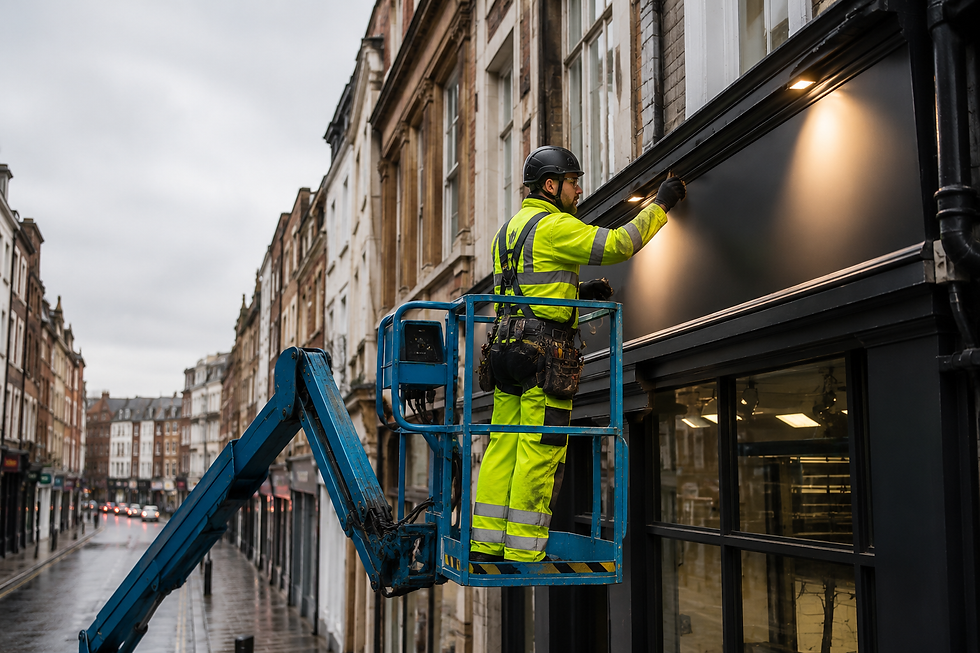
Installation itself calls for qualified, insured fitters, particularly where scaffolding, cherry pickers or electrical connections are involved. NICEIC-approved electricians should handle any mains wiring for illuminated fascias.
Aftercare matters more than most business owners expect. Bulb replacements, cleaning and periodic structural checks keep a sign looking sharp for years rather than months, and a sign maker offering a warranty on materials and workmanship gives you recourse if something fails early.

Which Signs Suit Your Business and Budget?
Your budget and location decide the sign type more than personal preference does: high-footfall high streets justify illuminated fascias and tray signs, while smaller units often get more value from window graphics and interior branding. Shop signage, digital signage and vehicle graphics all serve different jobs, and a competent sign makers will steer you toward the combination that matches your footfall, frontage and trading hours rather than selling you the most expensive option available.
Which Shopfront Signs Work Best on London Streets?
Illuminated fascia signs and tray signs perform best on busy London high streets because they stay visible after dark and hold up against the city's weather and pollution. Fascia signs sit flush above the shopfront and work well for restaurants, retail units and offices needing strong street presence. Tray signs, built from a shaped box with a printed or vinyl face, offer a similar look at a lower cost than full 3D built-up lettering.
Areas like Covent Garden, Soho and Borough Market see heavy foot traffic from multiple directions, which makes projecting signs worth considering alongside your fascia. A projecting or blade sign catches pedestrians walking both ways along the pavement, something a flat fascia can't do on its own.
Materials matter as much as the sign type. Marine-grade aluminium and UV-resistant acrylics cope better with London's rain and pollution than budget alternatives, and that difference shows up in how the sign looks after two or three winters rather than in the first few months.
How Can Interior and Digital Signs Help Customers?
Interior branding and digital signage shape how customers experience your space once they've walked through the door. Brand signage on reception walls, wayfinding systems in larger units, and menu boards in hospitality settings all reinforce the same identity your shopfront sign introduced outside.
Digital signage suits businesses that update pricing, menus or promotions often, since content changes on screen without reprinting anything. Restaurants and cafes benefit particularly from digital menu boards, which let you adjust dishes or prices seasonally without commissioning new signage each time.
Static interior branding still holds its place for reception areas and meeting rooms, where a fixed, well-finished logo wall or engraved plaque reads as more permanent and considered than a screen. Many offices combine both: digital displays for scheduling or wayfinding, static signage for brand identity.
When Are Window and Vehicle Graphics Worth Choosing?
Window graphics and vinyl graphics are worth choosing when you need low-cost, easily updated messaging, while vehicle graphics make sense if your business relies on mobile visibility. Window vinyls display opening hours, promotions or menu previews, and removable versions let you swap messaging seasonally without damaging the glass.
Vehicle graphics turn a delivery van or company car into a moving advert. A liveried vehicle can generate tens of thousands of daily impressions simply by driving its normal routes, which makes it one of the more cost-effective forms of brand exposure available to a small business.
Privacy manifestations on glass, required under some building regulations, double as a design opportunity: frosted or printed patterns meet compliance rules while still carrying your branding.
What Affects the Price and Timescale?
Price and timescale depend on sign size, material choice, illumination and how many planning approvals the project needs. A small vinyl window graphic can be produced and fitted within days, while an illuminated fascia requiring council consent might take several weeks once you include the application review period.
Sign Type | Typical Lead Time | Price Driver |
Window/vinyl graphics | 2-5 days | Size, material, removability |
Tray sign | 1-2 weeks | Size, illumination |
Illuminated fascia | 2-4 weeks | Materials, LED spec, planning consent |
Vehicle graphics | 3-7 days | Vehicle size, full wrap vs partial |
Digital signage | 1-3 weeks | Screen size, content management setup |
Budgets for London business signage span a wide range, from a few hundred pounds for a simple window vinyl to well over £20,000 for a large illuminated installation with structural engineering involved. Getting quotes from more than one sign maker helps you compare not just price but what's included, since aftercare, warranty length and planning support vary between suppliers. The Sign Company and similar established firms typically build these costs into a single quote, which makes budgeting more predictable than piecing a project together from separate designers, printers and fitters.
For more practical signage advice, explore our blogs, “Affordable Bespoke Signs” and “Sign for Shops”, for useful ideas and inspiration.
Conclusion
Getting sign design and installation right in London comes down to sequencing: a proper site survey, a design phase that accounts for planning restrictions, careful manufacturing, and installation by qualified fitters. Skipping any one of those steps tends to cost more in the long run, whether through a rejected planning application or a sign that fails after one winter.
Matching the sign type to your frontage and footfall pattern makes more difference to results than chasing the most elaborate option available. A well-specified tray sign on a quiet side street can outperform an oversized illuminated fascia that a borough won't approve.
Working with an experienced sign makers who manages design, production and fitting under one roof, such as The Sign Company, removes much of the coordination risk that comes with splitting a project across multiple suppliers. That continuity, paired with realistic budgeting and an early conversation about planning consent, gives your signage the best chance of looking sharp and staying compliant for years.


Comments