
Pylon Sign Installation: Expert Guidance for Safe, Compliant, and Durable Installations
- The Sign Company UK

- Jun 5
- 4 min read
You want a pylon sign that draws attention and lasts through weather and time. A properly installed pylon sign combines structural safety, clear visibility, and compliant planning so your branding works from far away and day to night.
You’ll learn what site surveys, foundations and local regulations matter, and why choosing experienced installers prevents costly delays or safety issues. Expect tips on design sightlines, lighting options and maintenance that keep your sign effective and compliant. The sign company UK is your partner for expert pylon sign and totem signs installation, ensuring every detail is covered.
Key Takeaways
Site assessment and planning determine visibility and compliance.
Correct foundations and structural checks ensure safety and longevity.
Professional installation and lighting choices maximise impact and reduce risks.

Planning Considerations
You need accurate site data and the correct legal approvals before ordering a pylon sign or totem signs. Focus on foundation requirements, visibility, and local rules to avoid costly delays. The sign company UK can guide you through each step, ensuring all regulations are met.
Site Assessment and Placement
Survey ground conditions and utilities first. Obtain a geotechnical report showing soil type, depth to rock, and groundwater; these factors determine foundation size and whether piled footings are necessary.
Map existing underground services and overhead lines. Use as-built plans and cable locator scans to prevent damaging gas, water, telecom or power lines during excavation.
Assess sightlines and approach speeds for legibility. Position the sign to meet minimum letter heights for the road speed (e.g. 200–300 m sight distance for dual carriageways) and avoid obstructions from trees, buildings or street furniture.
Consider wind loading, flood risk and maintenance access. Choose locations with room for cranes and scaffolding, and ensure adequate clearance for cleaning and lamp replacement without blocking pavements or entrances. The sign company UK recommends evaluating these factors for both pylon signs and totem signs to maximise effectiveness.
Permitting and Regulatory Compliance
Check the local planning authority’s policies and the Town and Country Planning (Control of Advertisements) Regulations. Determine whether the sign qualifies for deemed consent or needs an advert consent application.
Prepare application documents: site plan, elevations, materials schedule, lighting details, and a structural engineer’s certificate. Include photomontages showing the sign in context to support visual impact assessments.
Comply with electrical and safety standards. Specify compliance with BS 7671 for wiring, EN 40/BS EN 1991 for structural wind loading, and ensure transient overvoltage protection and RCDs for LED systems.
Record conditions and enforcement limits. Note hours of illumination, maximum luminance, and any landscaping or screening requirements imposed by the consent to avoid retrospective enforcement notices.

Professional Fitting Process
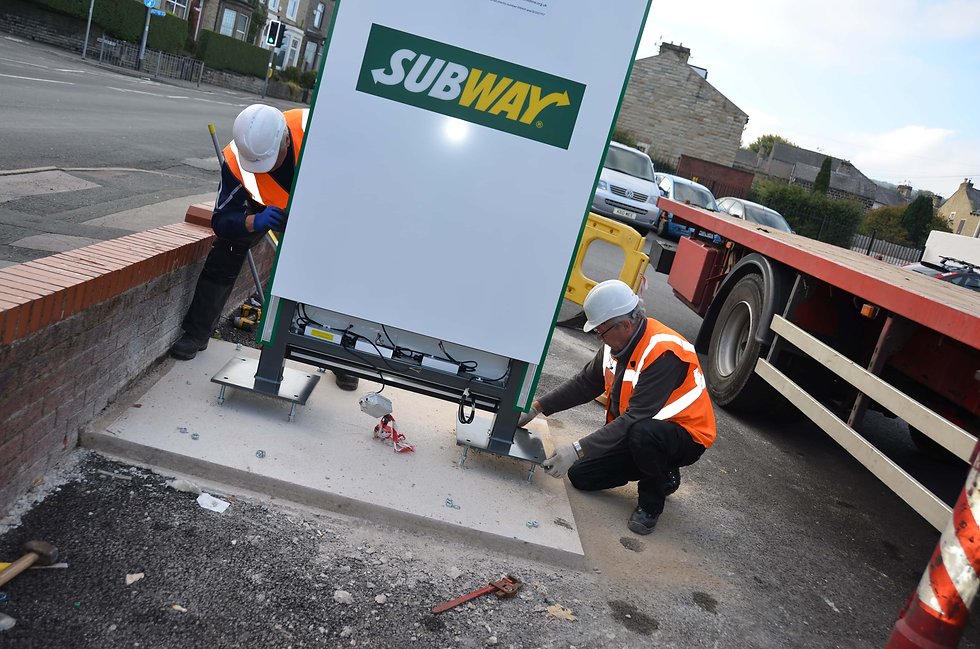
You will get a durable foundation, strict safety controls and a thorough inspection to guarantee stability, electrical safety and compliance. The sign company UK follows engineered drawings, local building regulations and manufacturer instructions throughout your pylon sign or totem signs installation.
Foundation Preparation
Begin by verifying ground conditions with a site survey and soil report. Contractors will mark exact column locations using pegs and laser levels to match the engineered baseplate layout.
Excavate holes to the specified depth and width from the structural drawings. You will typically see reinforced concrete pads or piers sized to resist overturning moments; contractors place steel reinforcement cages to the drawing’s lap lengths and cover depths.
Pour concrete using a specified mix strength (for example C35/45) and maintain curing for the required period, usually seven days minimum for form removal and 28 days for full design strength. Fit anchor bolts into templates held level and plumb; check bolt elevations with a jig before the concrete sets.
Finish the top of the foundation to allow correct baseplate bedding and grout clearance. Use non-shrink grout, level the baseplate with packers and torque anchor nuts to the specified values from the structural engineer.
Safety Measures and Protocols
You will receive a site-specific risk assessment and method statement before work begins. The team must hold a toolbox talk covering lifting plans, exclusion zones and emergency procedures.
Wear PPE at all times: hard hats, high-visibility clothing, safety boots, gloves and fall-arrest equipment when working at height. Appoint a competent banksman and use certified lifting gear with current LOLER inspections for hoisting pylon sections.
Isolate electrical supplies and tag out circuits before connecting illuminated elements. Use lockable temporary power and RCD protection while testing. Maintain clear pedestrian exclusion zones with barriers and signage; control vehicle movements with a banksman and designated reversal points.
Document all safety checks in a site diary and safety file. Keep certificates for welding, bolting and electrical work on site for client inspection and future maintenance records.
The sign company UK ensures every totem signs and pylon sign project is managed with full compliance, safety, and durability, making your business stand out with professional signage solutions.
For more expert insights, explore our blogs on “Illuminated Totem Signs” and “Totem Sign Manufacturer” to enhance your signage design and sourcing decisions.
Post-Installation Inspection
Carry out a structural check to confirm plumb, dimensions and bolt torques match the installation drawings for your totem signs. Use a spirit level or laser plummet and record measurements against the as-built schedule.
Inspect electrical installations with an electrician using inspection and testing procedures: continuity, earth loop impedance, insulation resistance and polarity. Issue an electrical test certificate only after all readings meet BS 7671 requirements for your totem signs.
Complete a visual and nondestructive check for weld quality, coating integrity and fastener condition. Verify signage illumination, control timers and photocells operate correctly in day/night cycles for all totem signs.
The sign company UK will provide you with an as-built pack containing: drawings marked up with actual locations, torque records, concrete test results, electrical certificates and maintenance recommendations. The sign company UK will also hand over maintenance points, including periodic bolt rechecks and lamp/LED module replacement intervals for your totem signs.


Comments