
Frosted Glass Door for Bathroom — Stylish Privacy and Practical Design Guidance

Updated: Oct 7
Bathrooms have a habit of being the darkest room in the house. They are often tucked away in the middle of a floor plan, with a small window or no window at all, and a solid door shuts out whatever light might reach them from the hallway. A frosted glass door changes that. It lets daylight flow through while keeping everything on the other side pleasantly blurred, so the room feels brighter and more spacious without anyone giving up their privacy.
It is easy to see why glass frosted doors internal to the home have become such a popular choice, from compact en-suites to family bathrooms and wet rooms. In this guide, we look at the benefits, the different finishes and frames available, and the practical points around fitting, cleaning and safety that help you choose a door you will be happy with for years.
Key Takeaways
Frosted glass gives you privacy without blocking natural light.
The finish, frame and hardware you choose shape both the look and how the door performs.
Safety glass, proper fitting and gentle cleaning keep the door looking good and working safely.
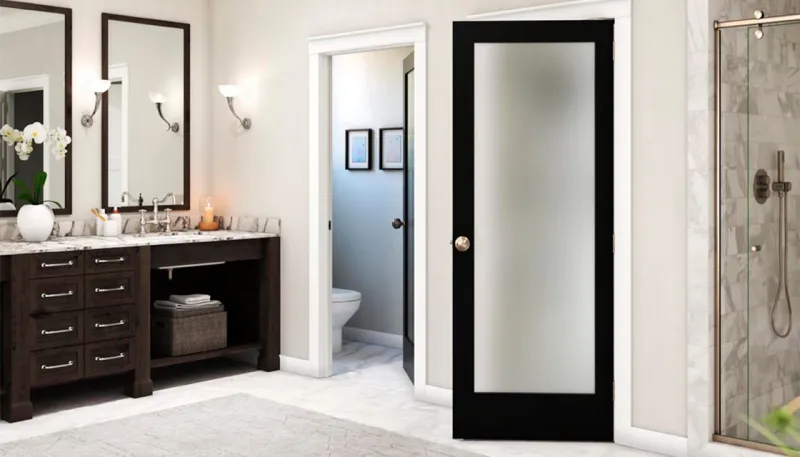
Why Choose a Frosted Glass Door for Your Bathroom?
Privacy Without the Gloom
Frosted glass hides shapes and movement while still letting light through, so you get the seclusion of a solid door without the dark, boxed-in feeling. How much it hides depends on the finish. Some options give near-total obscurity, while lighter frosting leaves a soft, blurred silhouette.
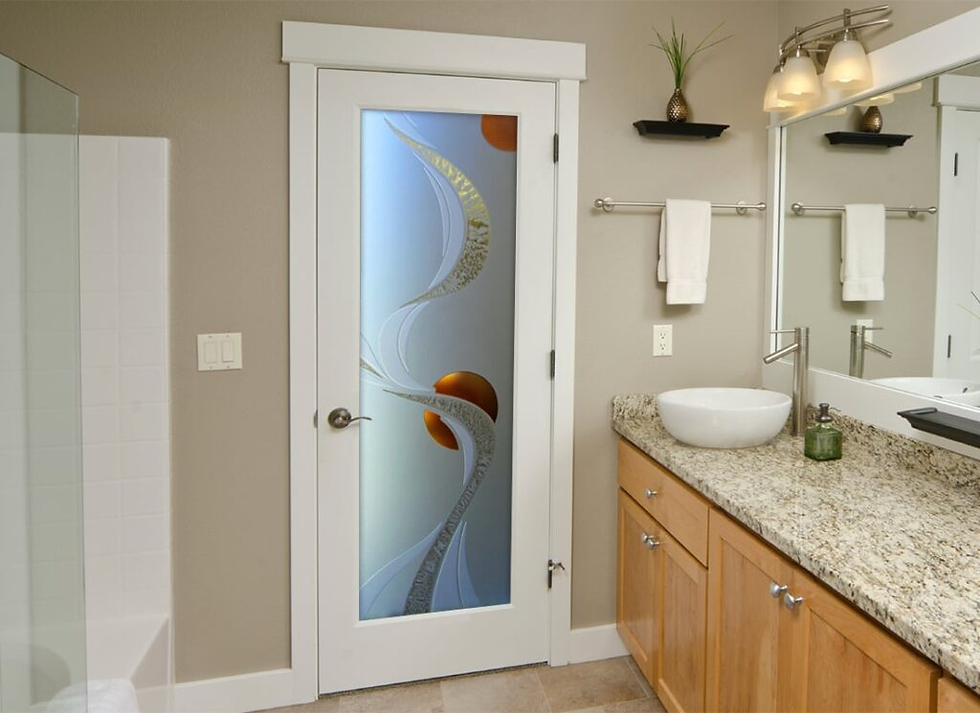
You can also be clever about where the frosting goes. Fully frosted panels give complete privacy, while banded or patterned designs can obscure eye level and leave the top of the glass lighter to let in more daylight. For shared bathrooms and en-suites, this kind of control helps avoid awkward moments while keeping the space feeling open.
A Clean, Modern Look
Frosted glass suits all sorts of interiors, from sleek modern bathrooms to Scandinavian and transitional styles. You can choose a classic white satin finish, a grey tint or a pattern, and pair it with chrome, brushed brass or matte black handles to match your taps and fittings.
Decorative touches such as horizontal bands, geometric motifs or a simple border add interest without overwhelming the room. Glass frosted doors internal to an en-suite are particularly effective here, as they connect the bathroom visually to the bedroom while still keeping things private.
Brighter Rooms, Naturally
Frosted glass lets a good proportion of daylight pass through, which can make a real difference to internal bathrooms and dark corridors. Instead of reaching for the light switch every morning, you get soft, even light that is ideal for shaving, applying make-up or simply starting the day in a brighter mood. Frosting also scatters light, so you avoid glare and harsh hotspots.
Making the Most of Small Spaces
In a narrow bathroom, a swinging door can eat up valuable floor space. Sliding and pocket doors with frosted glass free up that space, making it easier to fit a radiator, cabinet or towel rail near the doorway. Because the glass lets light through, the door also feels much less bulky than a solid alternative.
Frameless and slim-framed glass frosted doors internal to open-plan en-suites and wet rooms add to that sense of openness beautifully. It is still important to keep air moving, so a small gap under the door, or another form of ventilation, helps reduce condensation without compromising privacy.

Choosing the Right Frosted Glass Door
The right door depends on how much privacy you need, how much light you want and the conditions in your bathroom. Getting these choices right is what makes glass frosted doors internal to busy family homes both practical and long lasting.
Frosted Glass Finishes
There are a few main types of frosted glass, and each looks and performs a little differently.
Acid-etched glass has a smooth, even, satin finish. It hides shapes well while still letting plenty of light through, and its smooth surface resists fingerprints and water marks, making it a great choice for bathrooms.
Sandblasted glass can be blasted to different depths for more or less privacy. It looks beautiful, but its slightly rougher surface can pick up marks more easily in wet areas, so it is best sealed or kept for drier parts of the room.
Patterned or laminated glass includes designs or privacy interlayers between sheets of glass. Laminated glass also holds together if broken, which adds an extra layer of safety.
Frosted window film is applied to existing clear glass and is an affordable way to add privacy or decorative designs to a door you already have.
Whatever the finish, bathroom doors should use toughened or laminated safety glass.
Frame Materials
The frame matters as much as the glass, especially in a room full of steam. Powder-coated or anodised aluminium is light, rust resistant and pairs well with modern fittings. Stainless steel offers excellent corrosion resistance and a premium look, which is ideal if you use strong cleaning products or live near the coast. Timber frames bring warmth and suit traditional homes, but they need sealing and regular care to cope with humidity.
If you prefer a frameless look, make sure the glass is properly certified and that the hinges are rated for its weight. Heavy glass needs sturdy fixings into a solid wall or frame. Choosing glass frosted doors internal with a frame that suits your bathroom's humidity will help them stay looking smart for much longer.
Personal Touches
Measure carefully and choose the right width and height to avoid bulky trims. Handles are an easy way to tie the door into the rest of the bathroom, and matching their finish to your taps and shower fittings creates a cohesive, finished look. You can also add patterns or gradient frosting, and water-repellent coatings that make cleaning easier.
Fitting, Cleaning and Safety
DIY or Professional Installation?
If you are replacing a standard internal door with a prehung frosted glass door of the same size, a confident DIYer may be able to fit it. Common UK internal door widths are 686mm, 762mm and 838mm. Check the opening is square at the top, middle and bottom, and use packers to level the frame, because even a small misalignment can make the door stick or stop seals working properly.
For anything more involved, a professional fitter is the safer choice. That includes resizing an opening, structural work, large or heavy glass panels, concealed pivot hinges, fire-rated doors or frameless installations that need precise adjustment and sealing. A good fitter will use stainless steel fixings and give you a written guarantee covering the glass, hardware and labour. Glass frosted doors internal to wet rooms and en-suites in particular benefit from professional fitting, because good sealing protects the surrounding walls and floors from moisture.
Cleaning and Care
Looking after frosted glass is simple if you use the right products. Wipe it with a soft microfibre cloth and a pH-neutral glass cleaner, spraying the cleaner onto the cloth rather than directly onto the glass so it does not run into seals and hinges.
For stubborn marks, warm water with a little washing-up liquid and a soft, non-abrasive sponge usually does the trick. Avoid bleach, ammonia and abrasive powders, as they can dull the frosting and damage metal fittings. If there is sticky residue, a small amount of isopropyl alcohol works well, but test it on a hidden area first. Replace silicone joints with a mould-resistant bathroom silicone if gaps or black spots appear.
For more inspiration, explore our blogs on “Frosted Glass Doors Interior” and “Frosted Glass Shower Screen” to discover stylish ways to enhance privacy and light throughout your home.
Safety First
Glass in doors is a critical location under Building Regulations, so it should be safety glass. Look for toughened glass made to BS EN 12150, or glass that is impact tested to BS EN 12600, and ask your supplier for certification. Glass frosted doors internal to a family home should always meet these standards, especially where children are around.
For sliding and pivot doors, a soft-close mechanism helps prevent trapped fingers and slamming. Door stops and buffers protect glass from knocks against tiles and frames, and heavy panels should always be fixed securely. Frosting, banding or decorative film also makes glass more visible, which reduces the risk of anyone walking into it in a dim or shared bathroom.
At The Sign Company UK, we apply frosted window film, decorative designs and safety manifestation to glass doors and panels, which is a practical way to add privacy and visibility to doors you already have.
Frequently Asked Questions
Can I frost an existing glass door?
Yes. Frosted window film can be applied to existing glass to add privacy or decorative patterns, and it can be removed later if your needs change.
What glass should a bathroom door use?
Bathroom doors should use toughened or laminated safety glass that meets current British Standards for safety glazing.


Comments