
Business Signs Design: Practical Strategies for Maximum Brand Visibility

Good signage turns passers-by into customers by clearly communicating who you are and what you offer at a glance. A well-designed business sign boosts visibility, strengthens your brand and drives foot traffic when it balances legibility, colour contrast and placement. Whether you’re looking to update your storefront or commission new corporate signs, partnering with The sign company UK ensures your signage works as hard as you do.
You’ll learn practical design choices that make corporate signs readable from different distances, materials that last in specific environments and quick ways to align signs with your brand identity. Small adjustments — from font weight to illumination — can change how people perceive your business and how easily they find you.
Key Takeaways
Prioritise clarity and contrast to make your corporate signs instantly readable.
Use materials and finishes suited to the sign’s location and longevity needs.
Align colour, type and lighting with your brand for consistent recognition.

Core Principles of Visual Communication
Effective visual design makes your corporate signs readable at a glance, aligns colours with customer expectations, and keeps typography legible at distance. These choices determine whether passers-by notice, understand, and remember your message.
Typography Choices
Choose typefaces that prioritise legibility at the viewing distance and expected speed of traffic. Use sans‑serif fonts for short, high‑speed reads and reserve serif or decorative fonts for large, stationary displays where detail can be seen. Limit the number of type families to one or two to avoid visual clutter.
Set clear hierarchy with size, weight and spacing. Make the headline at least 2–3 times larger than secondary text. Increase letter spacing slightly for very large words to prevent optical collapse. Keep line lengths short for multi‑line copy; three to six words per line reads best from a distance.
Consider stroke width and contrast against the background. Thin strokes vanish at a distance or on low‑contrast surfaces. Test your chosen type in the actual sign size and lighting conditions before finalising.
Colour Psychology
Select colours that match customer expectations for your category and the emotions you want to evoke. Use red or orange for urgency and call‑to‑action, blue for trust and professionalism, and green for health or sustainability. Avoid colour choices that contradict your product or service.
Prioritise contrast for legibility. Aim for a lightness contrast ratio that maintains readability in bright daylight and at night under artificial lighting. Use tools to check contrast numerically rather than relying on visual impressions alone.
Create a limited colour palette: a dominant colour, one accent and a neutral background. Use accents sparingly to draw attention to your logo, price or CTA. Also account for material and finish — gloss, matte and reflective surfaces shift perceived hue and brightness.

Brand Consistency
Apply core brand elements consistently across every sign to reinforce recognition. Use the same logo proportions, clear space rules, and approved colour swatches. Maintain consistent headline treatments and icon styles so customers can identify your corporate signs instantly.
Document sign templates and usage rules in a simple brand grid or checklist. Include exact pantone or RGB values, font files, minimum sizes, and placement rules. Train installers to follow the guidelines to avoid scaling, cropping or incorrect colour reproduction.
Materials and Modern Techniques
Choose materials and methods that balance durability, visibility, cost and environmental impact. Focus on specific substrates, lighting systems and digital tools that match your brand, location and maintenance capacity.
Sustainable Options
Prioritise recycled aluminium, FSC-certified timber and high-density polyethylene (HDPE) for long-lasting, low-maintenance corporate signs. Recycled aluminium resists corrosion and weighs less than steel, so mounting costs drop; FSC timber gives warm aesthetics for retail or hospitality but needs a clear protective finish for exposed sites. HDPE resists moisture and UV, ideal for playgrounds or coastal businesses; it accepts direct digital print and routed shapes.
For graphics, select PVC-free vinyl or solvent-free inks to reduce VOC emissions during production and disposal. Ask suppliers for product data sheets on recyclability and expected service life. Consider modular designs that allow component replacement—face panels, LED modules and mounting brackets—to extend the sign’s usable life and lower total cost of ownership.
Illumination Technologies
LEDs dominate for energy efficiency and lifespan; choose chip-on-board (COB) or surface-mount-device (SMD) LEDs depending on uniformity needs. COB produces very even illumination for backlit trough-lit signs, while SMD allows tighter spacing and colour tuning for channel letters. For external corporate signs, pick IP65 or higher-rated LED fixtures to ensure water and dust protection.
Power considerations: specify driver efficiency, dimming capability (0–10V, DALI) and surge protection. Diffusers—opal acrylic or polycarbonate—control hotspots; thicker opal sheets reduce glare but add weight. For premium effects, integrate RGBW LED strips with a simple controller for scheduled colour changes, but confirm local planning rules for illuminated colour where relevant.
For businesses seeking maximum brand visibility with expertly crafted corporate signs, The sign company UK offers tailored solutions from design to installation, ensuring your signage stands out in any environment.

For more insights, explore our blogs on Business Signs LED and Company Signage to enhance your branding approach even further.
Digital Integration
Incorporate digital displays for dynamic messaging with your corporate signs: choose commercial-grade LCD, LED video walls, or e-paper based on viewing distance and update frequency. LCD/LED screens suit high-brightness outdoor placements; ensure 2,500–5,000 cd/m² for daylight legibility. E-paper works for low-power, static-or-slowly-changing content like directories.
The sign company UK recommends using reliable connectivity options for your corporate signs, such as wired Ethernet or cellular failover for remote sites. Use content-management systems (CMS) that support scheduling, templating, and remote diagnostics for your corporate signs. Secure devices with VPNs, strong authentication, and regular firmware updates. For safety and compliance, position screens to avoid driver distraction and follow local advertising and planning regulations. The sign company UK ensures your corporate signs meet all necessary standards.


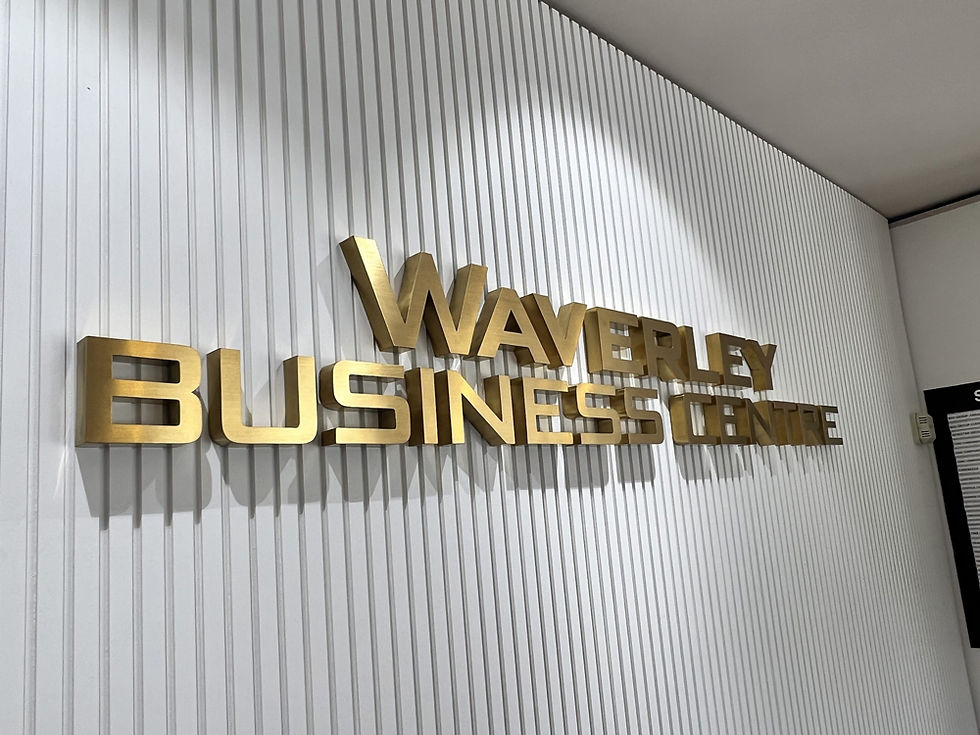
A clean, recognizable look makes customers trust you before they even walk in. I care about that same kind of clarity in my own work, which is why I rely on pest control software for small business to keep scheduling and client details consistent. You do not want a messy front or a messy back office.